
{
  "title": "Jazz Night at The Vortex",
  "startTime": "2025-07-04T19:30:00Z",
  "endTime": "2025-07-04T23:00:00Z",
  "location": "The Vortex Jazz Club,
    11 Gillett Square,
    London N16 8AZ",
  "category": "Music"
}6 June 2026
What's Going On (WGO) is an app I've been working on that allows users to collect and organise their events. One of the ways a user can add an event is via and image; users can import an image and extract an event from it — useful for event posters. On iOS we do this in two ways: with Apple's on-device model and with Google Gemini. While working on this, I decided to do some benchmark comparison between the on device model and the gemini model.
Median across 10 event posters. Accuracy scored over 4 fields: title, category, start time, and location.
On-device is 2.1× faster (2017ms vs 4240ms median) and more accurate (92% vs 77%). On-device won almost every single image.
The on-device model was more accurate and faster almost every single
time — but the times when it is not are actually quite interesting.
Before the app can use the
LanguageModelSession it pays a one-time model load cost
of about 5500ms to load the model into memory therefore the outlier
in our result is probably more representative of what a user would
experience. If every call added this latency then the remote Gemini
model would become significantly faster.
Fortunately, Apple provides an API for this exact case — Prewarm() allows us to load the model into memory, letting us pay that load cost before the user performs the action. This allows us to have the benefits of the on-device model without paying the extra latency cost.
Pre-warmed median excludes the first run, which pays the one-time ~5500ms model load cost.
I was surprised by the accuracy and also the speed of the on-device models. But the main lesson is the importance of pre-warming the model — in my case, when a user begins selecting an image for analysis we begin pre-warming the model, otherwise the latency becomes quite noticeable.
* All tests were run on an iPhone 16 Pro.
I used poster images generated by nano banana 2. And next to it is the json data I compared it against
{
"title": "Jazz Night at The Vortex",
"startTime": "2025-07-04T19:30:00Z",
"endTime": "2025-07-04T23:00:00Z",
"location": "The Vortex Jazz Club,
11 Gillett Square,
London N16 8AZ",
"category": "Music"
}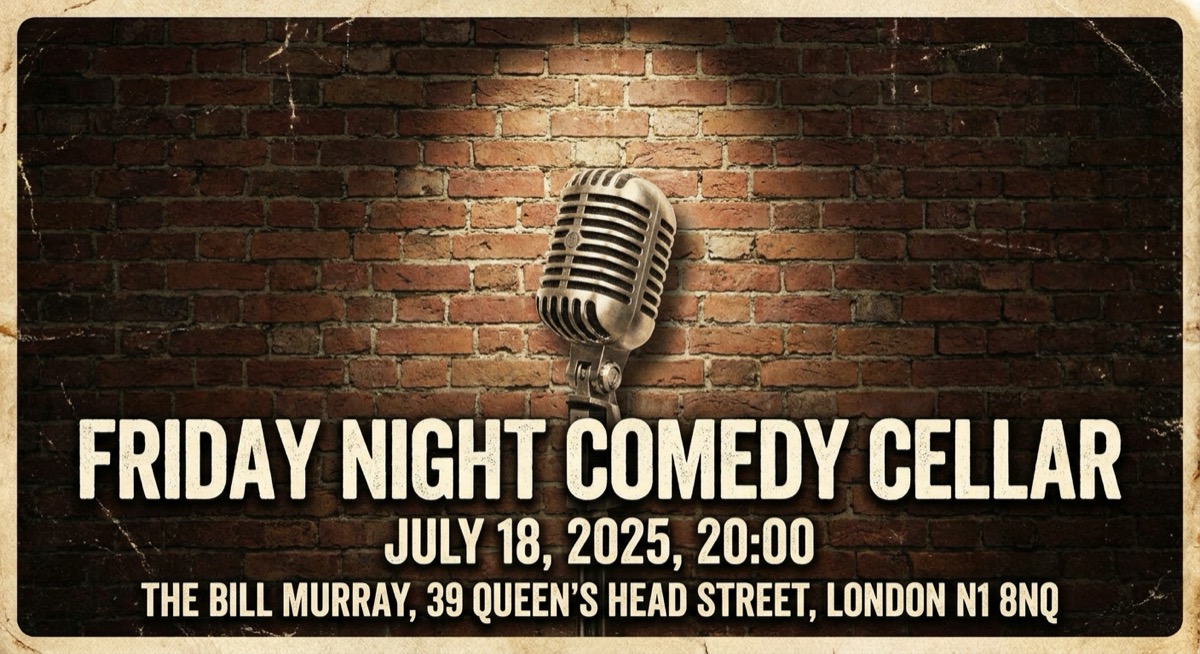
{
  "title": "Friday Night Comedy Cellar",
  "startTime": "2025-07-18T20:00:00Z",
  "endTime": "",
  "location": "The Bill Murray,
    39 Queen's Head Street,
    London N1 8NQ",
  "category": "Comedy"
}